
Mining
The scope, and by all standard operations and services of LFF Group of Companies in respect to; Ghana’s mining sector pre-dates the colonial era.
Historically, Ghana was known as the Gold Coast. Ghana is Africa’s largest gold producer; it overtook South Africa in 2019 with 4.8 million ounces in output.
Gold is the most commercially exploited mineral in Ghana, accounting for about 95% of the country’s mineral revenue.
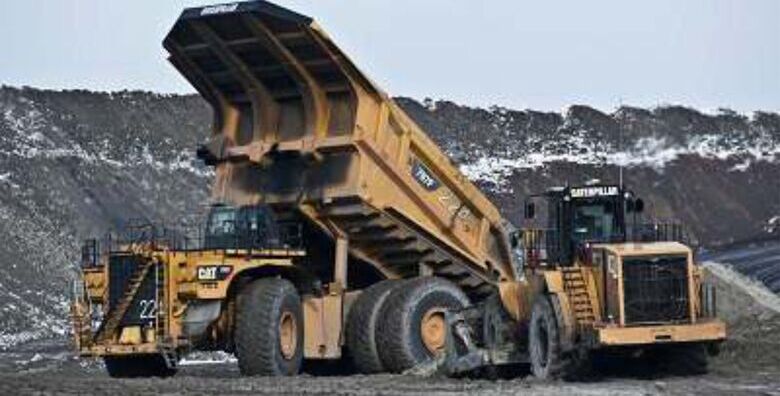
Other commercially exploited minerals in Ghana are manganese, bauxite, and diamonds. The country is also endowed with deposits of iron ore, limestone, columbite-tantalite, feldspar, quartz, and salt, and there are also minor deposits of ilmenite, magnetite, and rutile.
In 2018, Ghana discovered commercial quantities of lithium and is working with international partners to mine and develop lithium mining and processing. Under the managerial and consultancy services of mining and concession prospecting, LFF seeks to established that, Ghanaian mining production traditionally was state owned, but starting in the 1980s, Ghana moved toward privatization and state divestiture, including by attracting foreign investment. Mineral rights are granted to private parties giving them the right to mine the minerals in the ground. However, the Government of Ghana is entitled to a 10% equity interest in the mineral operations, even it if does not make a financial contribution. The government can increase its participation in mineral operations by agreement with the investor.
The small-scale mining industry is reserved exclusively for Ghanaians. Current investors have raised concerns about the localization requirements in Legislative Instrument 2431 (2020) on Minerals and Mining (Local Content and Local Participation). It requires license holders to create a localization program for recruitment and training of Ghanaians, imposes quota limits on expatriate hires (up to two in management with the General Manager position reserved for Ghanaians). Companies seeking to invest should be cognizant that civil society and senior government officials may want them to consider corporate social responsibility initiatives such as environmental protection and development of local infrastructure to support neighboring communities.
Performance
The mining sector plays a vital role in the Ghanaian economy, as it attracts more than half of all foreign direct investment (FDI) and generates more than one-third of all export revenues. The mining industry is the largest tax-paying sector in the country and makes a significant contribution to gross domestic product (GDP) and employment.
Sub-sector best prospects
According to LFF Group of Companies under our business portfolio we help foreign partners, emphasis on investment promotion has been a major objective of the company, with a shift to a comprehensive vision that facilitates greater exploitation, processing and downstream activities for Ghana’s minerals. Such opportunities include:
- • Need for investment, equipment, and services to develop the Ghana’s store of critical minerals such chromium, lithium, and zinc.
- • Mining and producing solar salt or caustic soda. The latter is used in the local soap and detergent industry. Chlorine by-product can also be used as water treatment chemical and as an input into various health and sanitation chemicals.
- • Producing clinker for the mining industry. Demand for clinker is estimated at over one million metric tons per annum.
- • Exploiting the extensive deposit of granite to produce high quality floor tiles.
- • Producing dimension stones for the building industry.
Mineral rights are granted to private parties giving them the right to mine the minerals in the ground. However, the Government of Ghana is entitled to a 10% equity interest in the mineral operations, even it if does not make a financial contribution. The government can increase its participation in mineral operations by agreement with the investor. The small-scale mining industry is reserved exclusively for Ghanaians.
Companies seeking to invest should be cognizant that civil society and senior government officials may want them to consider corporate social responsibility initiatives such as environmental protection and development of local infrastructure to support neighboring communities.