
Travel & Tour
Global tourism arrivals will increase by 30% in 2023, following growth of 60% in 2022, but will remain below pre-pandemic levels.
Nonetheless, future tourism development in Ghana is forecast to contribute significantly towards national growth and development (ROG, 1994).
In spite of this optimistic view, LFF Group of Company is looking forward to create a tourist business linkage in creating exchange programme for prospective business men in Ghana for cross culture trip to Europe and other parts of the world. This will help to grow an atmosphere of strengthening good relationship in tourism and busines
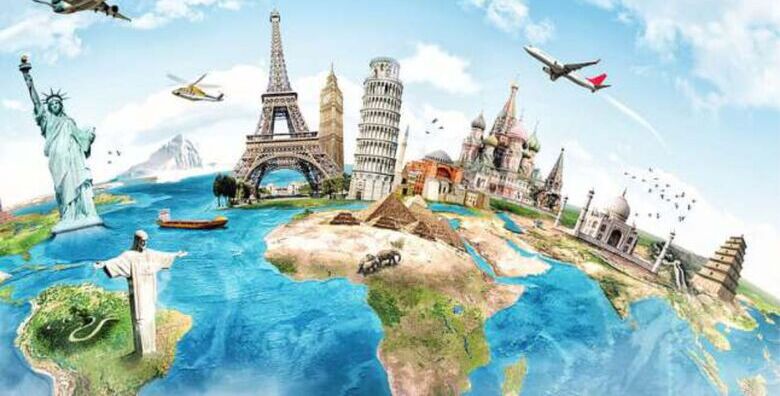
LFF Company project envisage into the future, address challenges and opportunities that may be encountered in this nascent industry.
This will be accomplished through an examination of past and present day national tourism plans policies and projects as well as the industry's resource base.
However LFF seeks to present an overview of Ghana's tourism resources and the policies and programmes shaping their development; to examine the recent rapid rate of growth of tourism in Ghana and the 12 challenges and prospects that it poses, and; to discuss some initiatives that could be employed to ensure a balanced, sustained and orderly development of the industry in future.
Looking at the Ghana's tourism resources in the development of tourism in Ghana, it presents the countries past tourism plans, policies and programmes and to some extent, the level of their implementation.
Under the Ghana's Tourism Resources; Ghana is a centrally placed West African country with an estimated population of about 35.4 million in 2020.
The land area is approximately 240,000 sq. km. The country has a tropical climate that is characterized by abundant sunshine.
Annual average temperature is about 25°c. There are two major season, the wet or rainy season which runs from April to July and the dry or harmattan season from November to February.
Ghana is endowed with numerous touristic resources which constitute a variety of attractions. The major ones include; first, ancient cultures, festivals and traditions of die people, rich in diversity, colour and pageantry. Areas of authentic cultural life include Kumasi, described as the cultural heart of Ghana, Bolgatanga, Bonwire and some craft villages that provide traditional and unique craftsmanship in goldsmithing and ethnic textile manufacturing and dressmaking, traditional African rural architecture and shrines of traditional African religion.
In another development, the traditional cultural events that take place in Ghana, traditional festivals seem to have the greatest support from Ghanaian communities.
Almost every community celebrates a major annual festival or observes periodic communal ritual, for such events reinforce the spiritual, social and artistic values of a society (ROG, 1975).
All such festivals give special place to art, music and dance as a focus of community participation and these occasions have attracted significant numbers of heritage loving tourists from both within and outside the country. Second, the 27 forts and castles built largely along the coast of Ghana between the 15th and 18th Centuries by major European powers - Britain, Denmark, Germany, Netherlands, France, Portugal and Sweden - have become major tourists showcases.
Some of these forts and castles have been designated as World Heritage sites by the United Nations Educational, Scientific and Cultural Organization (UNESCO). The oldest and most famous of them is the8,730 square meter Saint George's Castle built at Elmina in 1482 by the Portuguese and which became the first site for European settlement in the entire tropical world.
This castle is reputed to have Ghana on the other hand offers new and unique attractions; foreign exchange earnings. It must be noted however that tourism development can be a victim of its own success. It has a huge potential to bring economic prosperity and environmental improvements to destinations; but when it is poorly planned and managed, tourism can harm the very resources on which it is based.